

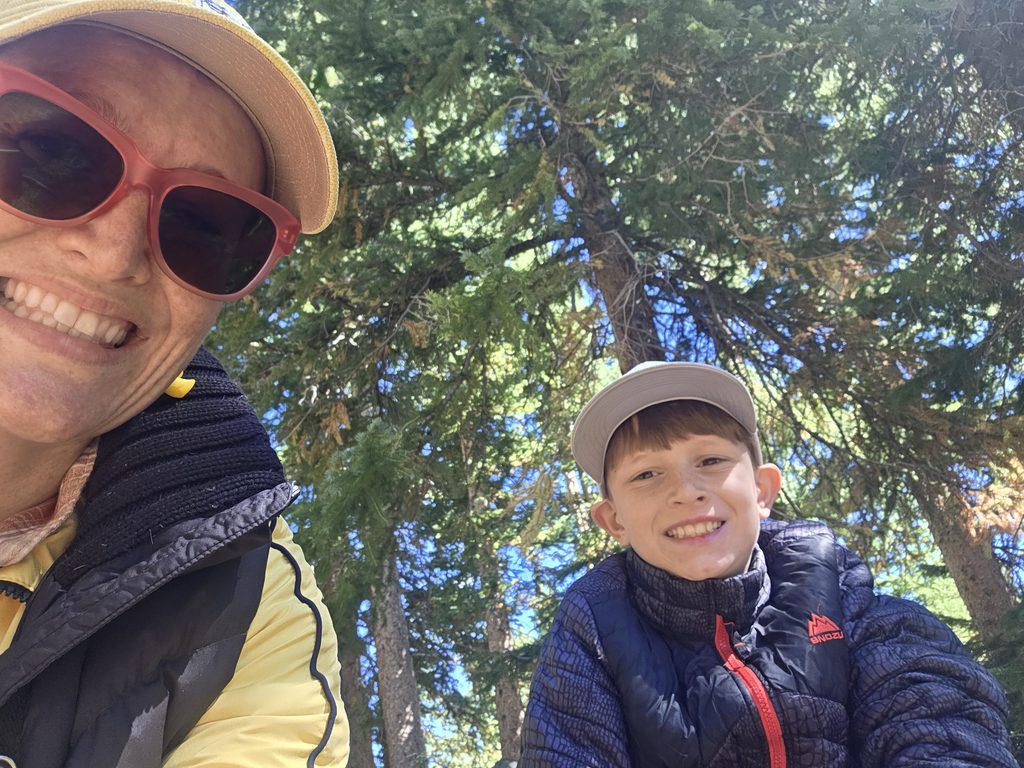
Last Thursday, I squished into a bus seat with my fifth grader and one of his friends for a long, lonnnnnng bus ride to Trappers Lake.
I have had terrible motion sickness ever since I became a mom (cool), and I was so happy I didn’t throw up that I told pretty much everyone about this accomplishment (less cool).
We happened to make what I think — although I did not officially confirm — is the 20th trip of this kind to Trappers Lake, teaching fifth graders to respect and protect our precious wilderness. The Forest Service employees were fabulous, and their zest for their jobs and their topics was inspiring.
Last Thursday also happened to be the anniversary of the signing of the Wilderness Act, putting into law this definition of wilderness: “Where man himself is a visitor who does not remain.”
In the wilderness, and in life, we really are just visitors. As much as what we do, don’t do, buy and feel seems so incredibly important, we aren’t even going to outlive the plastic water bottle I drained trying to keep up with a bunch of fifth graders at nearly 10,000 feet. (Alexa, make me do cardio.)
What struck me most about the trip was how different the fate of Trappers Lake could have been. Arthur Carhart was sent to the area in 1919 to consider its recreational development. Imagine cabins around that shoreline. Roads. “No Trespassing” signs. A breathtaking piece of our country gatekept for millionaires and billionaires.
Thankfully for all of us, Carhart recommended precisely the opposite. He decided the land was worth protecting, and convinced others it was important.
Our lives may be short, but the consequences of our decisions are not.
On the bus ride home from Trappers, I thought about what else exists that we assume will simply always be here. Community journalism is one of those things.
This week’s Herald Times is eight pages.
Eight.
That isn’t a “who’s got the bigger paper” contest, and a thicker newspaper isn’t automatically a better newspaper. But page count is a measurement of something very real that isn’t immediately obvious to the casual reader.
Advertising pays for the paper, ink, postage and other costs required to put this newspaper into your hands every week. This week, there wasn’t enough of it to support more than eight pages. That was half a paper five years ago.
I could assign blame. I could point at one advertiser in particular. I could show you a budget with ever-rising costs. I could talk about the government entities who want to publish their own versions of reality. I could whine (some more) about social media. Or I could declare it some personal failure of mine.
All of those things may be factors, but yelling about it is not particularly helpful.
Instead, the useful thing is to tell you what eight pages means. It means there isn’t room for puzzles this week. No room for Days Gone By, or middle school sports, or a plethora of other things.
And, in a twist that feels almost absurd, there isn’t room for my grandparents’ obituaries.
That’s right. There’s not enough space in this week’s newspaper to memorialize my own family. That hurts, of course. But what matters is not that they are my grandparents.
It’s that next time, it might be your grandparent’s obituary. Or your parent’s. Or yours.
On that note, one of the things I am proudest of about this newspaper is that we don’t charge for obituaries. I was today years old when I discovered publishing my grandparents’ obituaries elsewhere would cost $541.25… each. I now understand why families are so visibly relieved when they learn they do not have to come up with that kind of money just to put their loved one’s story somewhere permanent.
That is how it should be. A community newspaper is supposed to have room for things like this — things that don’t necessarily make money, but matter anyway.
Until it doesn’t.
I think it is important to explain why there are so many missing pieces in this week’s paper. Not as a sob story, not as a manifesto against one failure or another, but because you deserve to know, and because what happens next will require choices.
Preservation is not a passive activity. Trappers Lake didn’t save itself. It is only available for us to enjoy because generation after generation decided it was worth protecting.
I don’t think we’ve given people who believe community journalism matters a meaningful way to make that same choice. The good news is we’re working on it.
In the coming weeks, we hope to show you what that looks like.


