



RBC | When the PL Gulch Fire was first reported Monday, July 13, some residents feared they were about to watch history repeat itself.
The human-caused blaze ignited north of County Road 5, just outside last year’s Lee Fire burn scar, prompting evacuation orders, road closures, and concerns that Rio Blanco County was headed for another devastating wildfire event.
So far, the worst hasn’t materialized.
As of press time, the PL Gulch Fire is 55% contained. A Type 3 Incident Management Team is preparing to turn control back over to local entities at 6 a.m. Thursday, July 23. Evacuation orders have been lifted, County Road 5 has reopened, and more than 200 firefighters and support personnel have successfully held the fire’s footprint to 1,580 acres.
To better understand why PL Gulch didn’t become another massive blaze, the Herald Times spoke with Doug Cupp, Operations Section Chief with the Colorado Incident Management Team.
The answer, Cupp told the HT, wasn’t just luck. It was recognizing an opportunity—and being ready when it arrived.
A WINDOW OF OPPORTUNITY
For several days after ignition, thunderstorms brought powerful outflow winds but very little rain.
“That was when we saw a lot of the big growth,” Cupp said.
Erratic winds made fire behavior difficult to predict and dangerous for crews fight directly. Then, conditions changed. A small amount of moisture arrived with passing storms just as the Type 3 Incident Management Team deployed additional crews and equipment.
“That was really good timing for us because that was right when we started getting all of the resources in,” Cupp said. “We were able to have them on the ground working as soon as that moisture came.”
The change allowed firefighters to abandon a larger contingency plan and switch to what firefighters call a direct attack—building containment lines immediately adjacent to the fire.
“We were lucky to have the opportunity,” he said. “Then we just put all the resources into that new strategy.”
WHAT IS EXTREME FIRE BEHAVIOR?
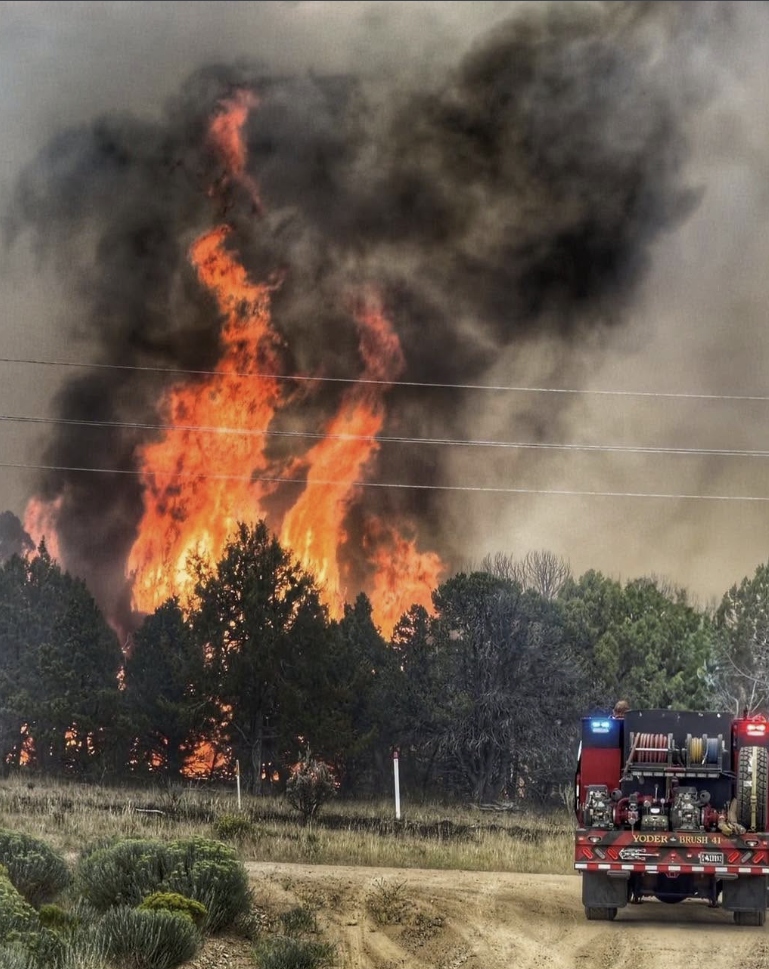
In the first few days, officials said the PL Gulch Fire was exhibiting “extreme fire behavior.” This means five- to eight-foot flame lengths, according to Cupp. “That does not really allow for humans to be that close.”
The Brush 41 crew from Yoder, Wyoming, witnessed flames lengths approaching 40 feet during their time here in Rio Blanco County. The crew returned home Monday after completing a 14-day deployment on multiple fires, according to Fire Chief Justin Burkart.
Extreme fire behavior changes the attack strategy considerably. “When fire behavior is really intense, we have to go indirect,” Cupp explained.
Rather than working right along the fire’s edge, crews switch to developing containment lines well ahead of where they expect the fire will be 24 or even 36 hours later. Later, they may use those lines for burnout operations.
Another major factor was fuel conditions. “The fuels are drought-stricken,” Cupp said. “Some of them are even dormant because there’s just no moisture in them. As soon as you get wind on it,” he said, “you have really rapid fire growth.”
FIGHTING FIRE IN AN OIL FIELD
The Piceance Basin presents another challenge not found on many wildfires: active oil and gas infrastructure. “There is potential,” Cupp said. “But there’s so much mitigation done to protect that oil and gas.”
Operators maintain large cleared areas around facilities that reduce nearby vegetation capable of carrying fire. During the PL Gulch Fire, wells inside the fire area were shut in, leaving only enough pressure in the lines to prevent leaks.
Rather than worrying about equipment above ground, firefighters are often more concerned about what lies beneath them. Before bulldozers construct containment lines, crews coordinate with energy companies and resource advisors to identify underground pipelines and buried infrastructure.
QB Energy Operating LLC, which operates facilities within the PL Gulch burn area, did not respond to a request for comment before press time. Cupp told the HT representatives from the affected companies attended planning meetings throughout the incident and provided maps to help firefighters safely navigate the area’s extensive network of infrastructure.
BRINGING IN THE BIG GUNS
One of the biggest misconceptions Cupp hears is that every wildfire can immediately be attacked with helicopters and large air tankers.
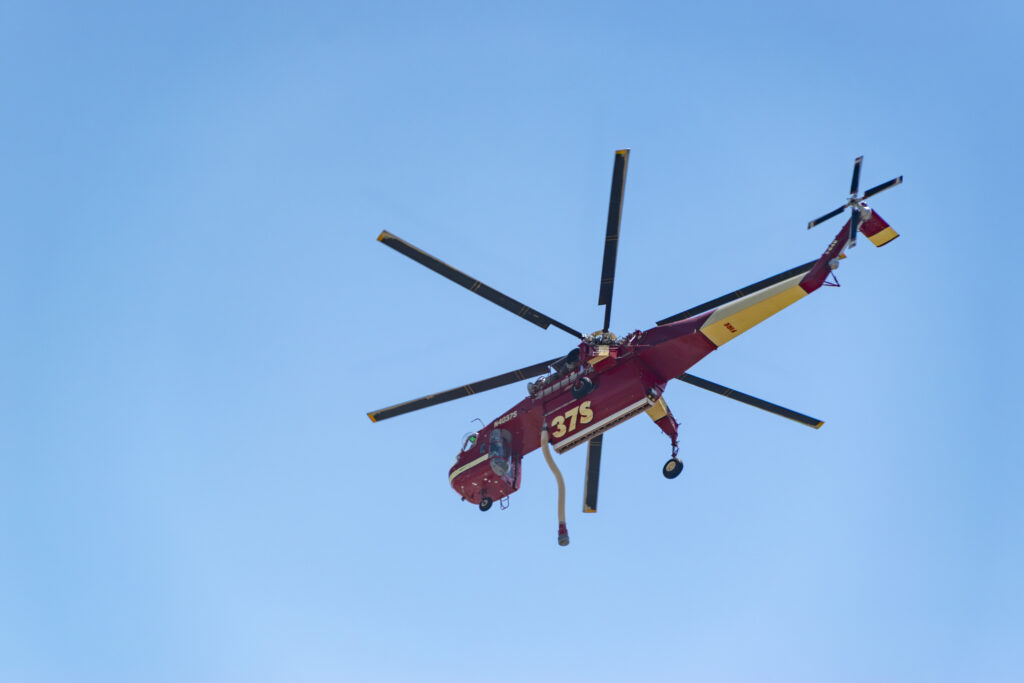
The same weather conditions that make fires most dangerous often prevent aircraft from flying safely. High winds ground helicopters. Smoke reduces visibility. Aircraft are also shared nationally, meaning fires posing greater threats elsewhere may receive priority for those resources.
“It’d be a perfect world if we could do that,” Cupp said. “It’s just unfortunately, there’s not enough resources.”
That reality becomes even more significant as national wildfire activity increases. The National Interagency Fire Center has raised the country to Preparedness Level 5, the highest national preparedness level, reflecting heavy competition for firefighting resources.
Instead of assuming aircraft will always be available, Cupp hopes homeowners prepare their properties before the threat of wildfire is at their doorstep.
“We really need people to be thinking about protecting their own properties before a fire ever starts,” he said.
HOW YOU CAN HELP: BE PREPARED
Cupp’s message closely mirrors work already underway in Rio Blanco County.
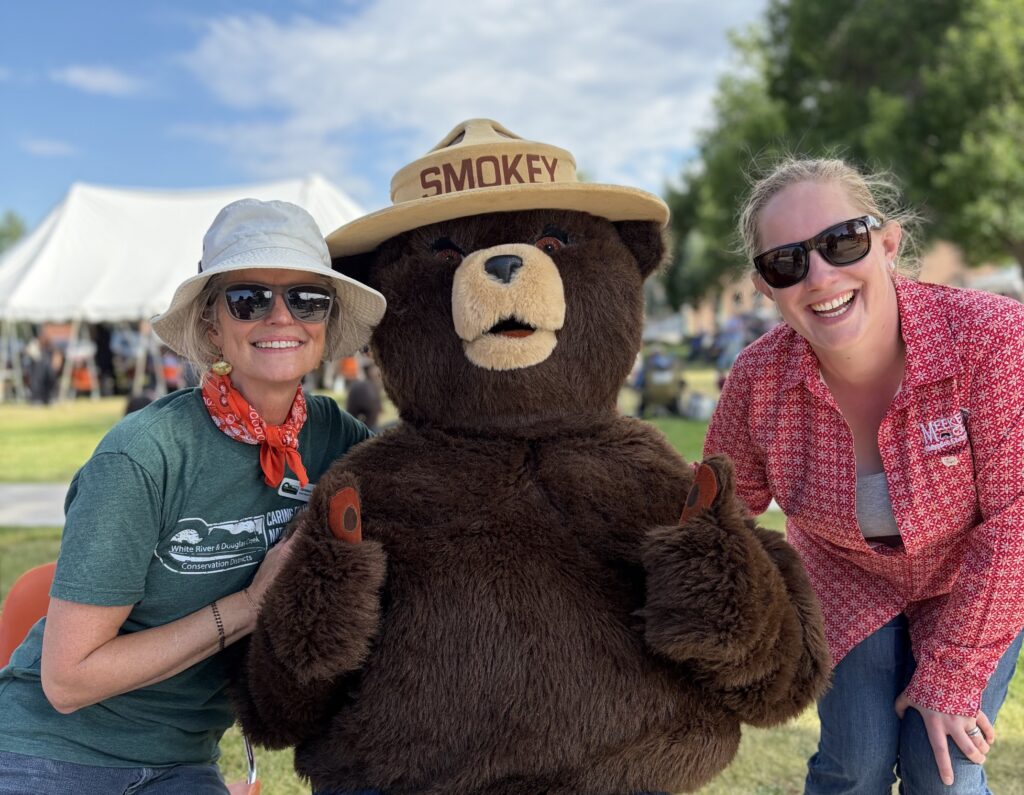
During Friday’s Meekerpalooza, the White River and Douglas Creek Conservation Districts partnered with several organizations for a Wildfire Preparedness Bootcamp funded by a National Wildfire Community Preparedness Day grant.
Residents rotated through stations covering home hardening, defensible space, fire prevention, chainsaw safety, wood chipping and other mitigation topics, with instruction provided by the Colorado State Forest Service, U.S. Forest Service, local fire agencies, Rio Blanco County, the Town of Meeker and the conservation districts.
Districts Executive Director Vanessa Trout said organizers hope the event becomes an annual tradition. The districts also continue offering homesite assessments, mitigation planning and cost-share opportunities through their Forest Health Resiliency Program and are partnering with the Town of Meeker for a free community chipping day in August.
For Cupp, those types of preparations can make all the difference.
“When we show up and we only have a little bit of work to do on each home before the fire gets there,” he said, “it’s going to be so much better off, and gives us more opportunities to engage safely.”
HOW FIRE HAS CHANGED
After nearly three decades on wildfires across the West, Cupp said today’s fires bear little resemblance to those he encountered early in his career.
“When I started, I remember going to fires that were 10,000 acres, and that was huge,” he said.
Today, Cupp said, fires can exceed 100,000 acres in a matter of hours.
“We’re seeing fires like East Troublesome that went 100,000 acres in six hours,” he said. “We’re seeing longer burn periods during the day, and we’re seeing longer seasons throughout the year. We just call it a fire year now, not a fire season.”
Even after favorable weather helped firefighters gain the upper hand on the PL Gulch Fire, firefighter safety remained the center of every tactical decision.
Colorado has already experienced four wildland firefighter fatalities this year. In a profession where crews work together season after season, those losses ripple throughout the close-knit wildland fire community.
“When we come to fires like this, it’s like a reunion,” Cupp said. “You worked together the year before, or the fire season before.”
That reality shapes every operational decision firefighters make.
“We risk a lot to save lives,” Cupp said. “But we try not to risk a lot to save property.”
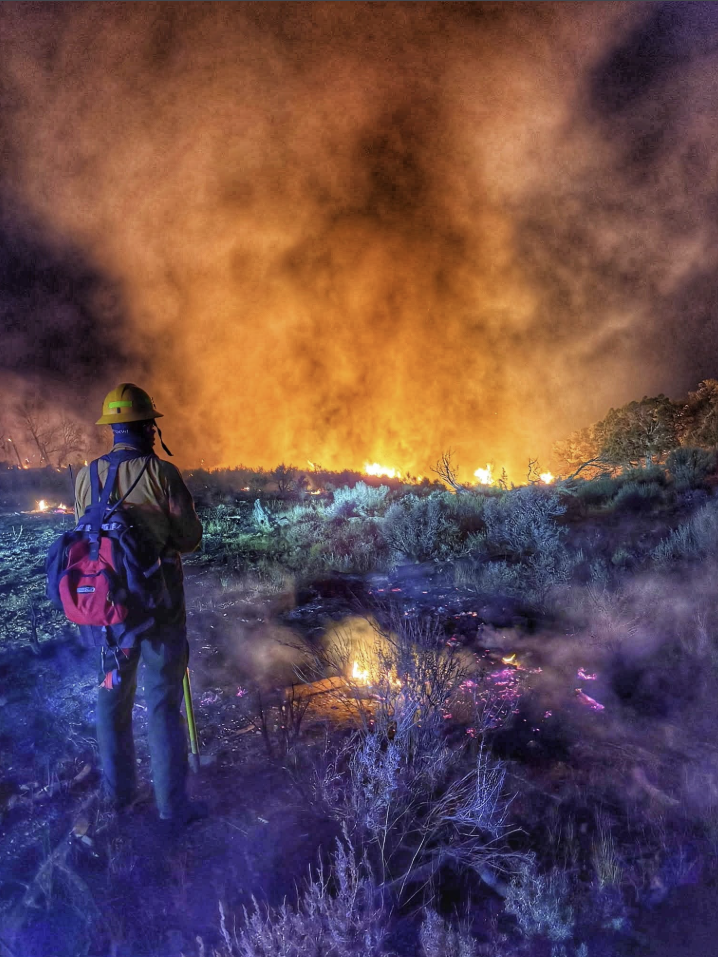
BAILEY POWELL/YODER FIRE DEPARTMENT PHOTO