





Council votes 4-1 against Stage 2 of geothermal study
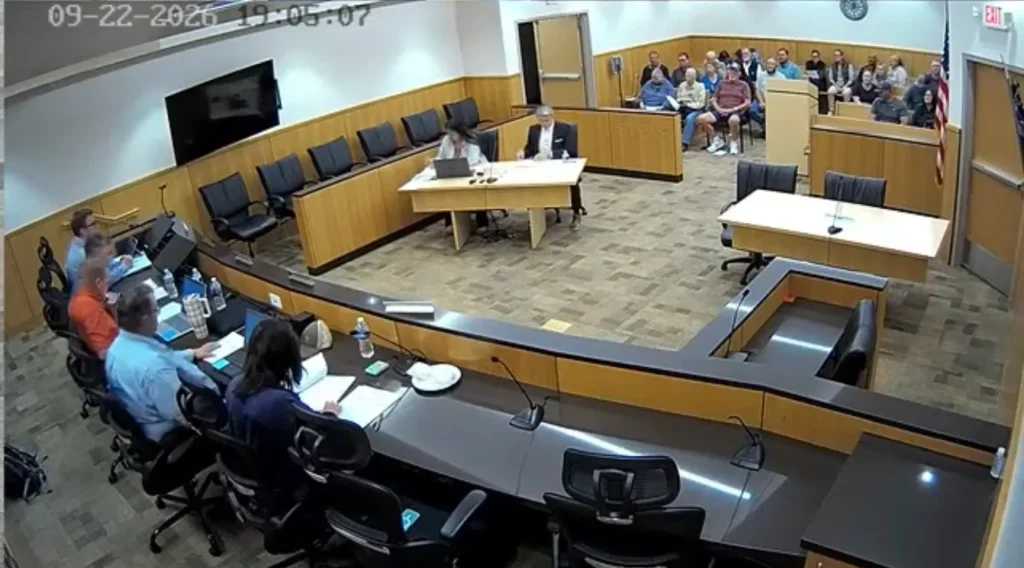
The Rangely Town Council voted 4-1 Tuesday night not to move forward with Stage 2 of a proposed geothermal development, halting for now a project that had become increasingly tied to questions about data centers, water use, cost and public transparency.
The vote followed public comment from more than 10 residents. Most speakers opposed the proposed data-center component or urged council not to spend additional money on the project. Others said they did not have enough information to determine whether the proposal would ultimately benefit Rangely.
The Town has been exploring a model in which one or two modular data centers would initially connect to the electrical grid, with revenue from the units helping finance exploratory geothermal drilling. If a viable geothermal resource were developed, geothermal energy could eventually help power the computing facilities. Pure-Green Colorado, working with The GreyEdge Group, completed the first stage of the Town’s geothermal work and proposed conducting Stage 2 for $59,850, plus additional legal and advisory expenses.
Mayor Todd Thayn emphasized Tuesday that moving into Stage 2 would ultimately cost more than the approximately $60,000 consultant fee.
“It’s going to be over $100,000 because we’ve got to pay for advisers after the study comes,” Thayn said. He defended the broader effort to explore new ideas, noting that Town Manager Jonah Bollinger had been specifically tasked by the council with looking for unconventional sources of revenue as mineral lease and severance-tax revenues declined. At the same time, Thayn reiterated concerns about spending money on a study performed by a company that could have a financial interest in the project.
Residents raised a wide range of concerns Tuesday, including the Town’s water supply, the longevity and local economic impact of data centers, housing costs, infrastructure, the companies involved and how much information had been made available to the public before council was asked to authorize additional spending.
Jessica Dillon said she trusted council members and believed they wanted something good for Rangely, but said that was different from having enough information to justify the expenditure.
“There isn’t enough information for anybody in this room to see what Rangely will look like in five, 10 years if we say yes to this,” Dillon said. She asked council to provide residents with more information before proceeding.
Beth Wiley took a less definitive position on the project itself, saying she did not yet know enough to decide whether it was good or bad. Instead, she focused on public engagement. Wiley said she had watched the Aug. 11 council meeting, during which trustees discussed a social media push, town halls and other efforts to inform residents before spending significantly more money.
“I think you can involve us,” Wiley said, adding that residents had been trying to research the project themselves but had found information difficult to locate.
Resident Tanner Nielsen, who has questioned the proposal at previous meetings, arrived Tuesday with a packet of records and research. Nielsen said he had filed a Colorado Open Records Act request because he wanted to know more about Pure-Green and the Town’s dealings with the company.
Among the records was a nondisclosure agreement between the Town and Pure-Green signed in March of this year. He criticized the agreement and questioned why discussions involving the company had not been more visible publicly. Resident Frank Huitt also asked if an NDA had been signed, to which Bollinger responded yes. Bollinger stated the NDA was intended to protect information involving another Pure-Green project, which he said is now publicly the Moffat County proposal. He said the agreement did not prevent Rangely officials from public discussion.
“It’s very strictly written and very clear in our NDA that anything can be brought up in public meetings,” Bollinger said.
Nielsen also raised another series of speculative corporate connections. During his comments, Nielsen said Pure-Green had partnered with Sage Geosystems and referenced Sage’s relationship with Meta, eventually saying he was “going off the assumption” that Meta could be the company behind the proposed Rangely data centers.
The Herald Times’ Sept. 19 report on the Rangely proposal did not identify Sage Geosystems as a participant. There is, however, a documented connection among the companies: GreyEdge presented a separate proposal for Aspen School District in partnership with Pure-Green and Sage Geosystems for a geothermal energy-storage project.
Sage does have a documented partnership with Meta, as well. Meta announced in 2024 that it was working with Sage to develop next-generation geothermal power to support its data centers, with the first phase expected to provide up to 150 megawatts.
As of press time, the HT does not have records indicating Sage or Meta is involved in the Rangely proposal. We reached out to Bollinger requesting records related to this story on Saturday, Sept. 19. Monday, he told the HT documents would be available Wednesday.
Thos records, received Wednesday morning, confirm Sage Geosystems was contemplated as the geothermal technology partner for the Rangely project.
Resident Tammy Dahle also questioned the status of the Town’s earlier Cogency Power renewable-energy project, which former trustee Don Davidson regularly discussed Dahle referred to a $10 million grant; records show the Town was awarded $5 million in federal funding for the project. Regional economic-development documents described the proposed development as nearly $10 million in total capital investment. The project later faced funding and development delays. Dahle asked council what became of it before the Town pursued another large energy-development proposal.
One resident spoke in favor of proceeding with Stage 2. Jeff Bollinger argued the next study could provide answers to many of the questions residents were asking. “I don’t know if I’m for this project. I don’t know if I’m against this project,” he said. “But I know that I can’t reasonably form an opinion on what this project is without that accurate information.” He asked whether Stage 2 could determine how much water and electricity the Rangely project would use, how much noise the data centers could produce, where they would be located and what the positive and negative impacts could be. “I think that we should end the speculation and start operating with discussions based on fact,” he said, and asked council to proceed with the study so residents could later debate the project using “accurate, factual information.”
The argument was echoed by Trustee James Dillon, who cast the sole vote in favor of continuing.
“I do think geothermal could potentially be a strong source of revenue,” Dillon said. “The data centers could be a strong source for revenue.”
Dillon said he shared many of the concerns voiced by residents but believed Stage 2 could answer those questions before council made a final decision about whether it wanted the development.
Other trustees were not convinced the Town should spend the money necessary to obtain those answers. They cited the Town’s tight budget, uncertainty surrounding the proposal and the opposition expressed by residents Tuesday.
The discussion also occurred against the backdrop of existing infrastructure expenses. Earlier in the meeting, Bollinger reported that Rangely had been able to lift its recent water restrictions after White River flows improved, but said repairs to the Town’s damaged drinking-water storage tank were now estimated at approximately $1.7 million.
Thayn said those obligations weighed heavily in his decision.
“I don’t see how we can afford to go forward with this with the amount of risk,” he said.
Mayor Pro Tem Andy Shaffer ultimately moved not to approve the Energy Campus Development and Municipal Participation Study, Stage 2 of the Rangely geothermal development. Trustee Brenda Ahrens seconded the motion. Trustees Tim Webber and Robby Elam were absent from the meeting.
Council voted 4-1 not to approve Stage 2, to cheers and applause from gathered community members.
Trustees then continued with the regular agenda.
– Town Manager Bollinger reported lifting of recent water restrictions after river flows improved to above 200 cubic feet per second.
– Repairs to the Town’s damaged drinking water storage tank are now estimated at approximately $1.7 million; replacement options are being evaluated.
– Replacement work is underway on deteriorating PVC fittings at the water plant.
– Asbestos remediation on Birch Street is expected to be completed this week.
– Council discussed the proposed Wolf Creek water storage project and a resolution recognizing Rangely’s long-term need for additional municipal water storage. District representative Alden Vanden Brink emphasized final costs and participation levels would be determined later. Council tabled the resolution to give trustees more time to review it.
– Council approved pursuing a 2027 Justice Assistance Grant for two new patrol vehicles totaling $191,590, with no local match required if the grant is awarded.
– Trustees also heard an update on the recent youth pitch competition.
– Council heard routine reports and announcements, including updates on Rangely homecoming, vacancies on the Rangely Development Agency/Rangely Development Corporation board and Planning and Zoning Commission, and the cancellation of the Sept. 26 community outreach meeting.