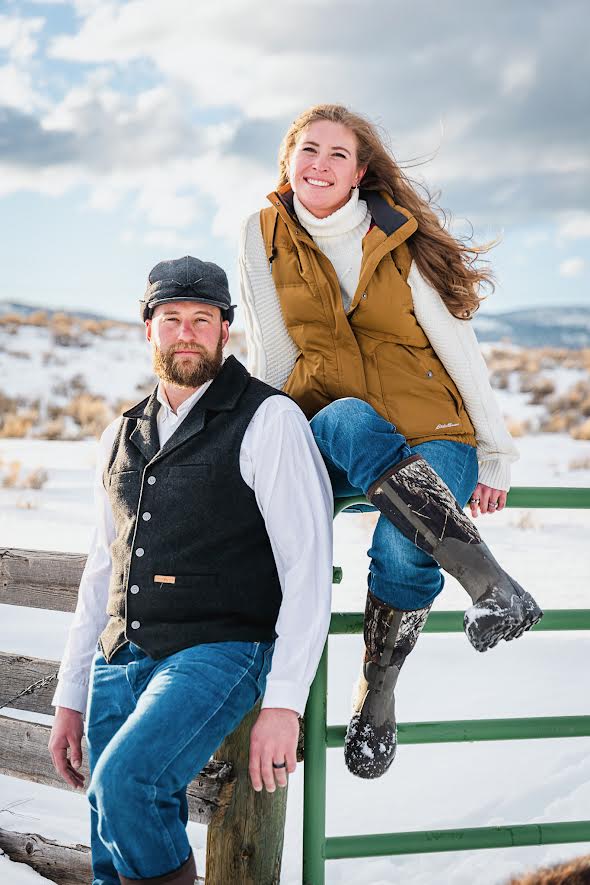



RBC | How will Rio Blanco County balance economic growth with environmental conservation? That’s the challenge facing Reece Melton, the county’s newly appointed natural resource director.
Melton, a graduate of Colorado State University, earned his degree from the College of Agriculture before obtaining a master’s in range management and range stewardship. He currently resides in Toponas, Colorado, where he and his wife purchased a home in 2021.
For now, Melton plans to work in Meeker two to three days a week, depending on his schedule, while also traveling to meetings and conferences across the Western Slope. As he begins his new role, he is focused on understanding the county’s priorities.
“It’s going to be a broad scope,” Melton said. “I have my experiences in particular areas, whether it’s grazing, livestock, or soil health, but then there are areas where I have more to learn, like oil and gas. Ultimately, what it comes down to is not really what my priorities are, but the priorities of the county.”
Melton emphasized the importance of listening to Rio Blanco County residents, local commissioners, and conservation districts to determine key concerns at both the state and federal levels.
Melton said his passion for the position comes from his long-standing interest in natural resources and public policy.
“I’ve always enjoyed the combination of two hobbies—education and choices—especially when it comes to natural resources and policy,” he said. “I’ve been very involved with the Colorado Farm Bureau for the last several years. Most people don’t enjoy engaging in the political process as their pasttime, but I always have.”
His experience advocating on issues like wolves, water and agriculture led him to pursue this role.
“There was a position available where it’s not just policy, but it’s also natural resources and agriculture. It was pretty difficult not to jump on an opportunity that combines two things I really enjoy working in,” he said.
Melton believes that shifting political landscapes at the state and federal levels will shape Rio Blanco County’s natural resource policies. Key issues include balancing traditional energy sources like oil and natural gas with the push for renewable energy, such as solar and hydroelectric power.
He also noted the growing impact of carbon markets, where landowners could be compensated for carbon sequestration.
“One thing I think of is this carbon market conversation—quantifying carbon sequestration and how much carbon landowners are storing on their ranches,” Melton said. “I think that’s going to be an issue alongside all of those other things.”
Melton identified water as a major issue in Rio Blanco County.
“It’s been an ongoing issue—protecting it for landowners, who own the right to use that water,” he said. “It’s a tough conversation when it comes to shortages, calls on the river, and redirecting for different projects.”
He stressed the need to ensure that water management decisions do not negatively impact those who rely on it for agriculture, energy development, or municipal use.
While Melton acknowledged that although oil and gas are areas where he has less experience, he is eager to learn.
“There’s a balance, right? I’m excited to lean on more experienced individuals within the county and the industry,” he said. “In the next couple of weeks, I’m looking forward to meeting with folks and getting out in the field to learn more about what oil and natural gas look like in Rio Blanco County.”
On renewable energy, Melton said the county’s future will depend on how these projects impact local communities.
“It comes down to what the county, constituents, and industries see as beneficial or negative,” he said. “I think a lot of these things have to be locally driven.”
Melton emphasized the importance of engaging with local stakeholders.
“The best thing you can do is meet people on the ground—whether that’s on a farm, a ranch, or at a formal meeting,” he said. “I’m looking forward to attending conservation district board meetings, county events, and commissioner meetings where public comment is taken.”
He encouraged Rio Blanco County residents to stay involved in resource management decisions.

“A huge economic driver in this county is wildlife resources—whether it be hunting, fishing, or recreation. Landowners have been managing their land wisely for generations,” he said.
He urged citizens to take an active role in decision-making.
“The best thing residents can do is get involved in the political process, attend stakeholder meetings, ask questions, and advocate for the responsible use of our natural resources,” Melton said.
As Melton settles into his position, he looks forward to meeting more community members, learning from industry experts, and tackling key resource challenges. With a mix of experience, policy expertise, and a passion for conservation, he hopes to make a lasting impact in Rio Blanco County.