



Special to the HT
For ranchers across the West, drought is no longer an occasional challenge—it is something that must be planned for as part of doing business. Andy Mueller, general manager of the Colorado River Water Conservation District, says, “This summer is a dress rehearsal for what lies ahead as warmer temperatures affect our mountain snowpack. Science shows that 30 years from now, this year will be on the wetter side.”
Grazing consultant and educator Jim Gerrish recently hosted a well-attended grazing clinic in Meeker with funding from the White River Conservation District. He has spent decades helping livestock producers improve profitability while strengthening the health of their land. His central message is that healthy soils, vigorous pastures and sound grazing management create more resilient ranches that can better withstand dry years while reducing costs.
Gerrish’s main message is that profitability begins with managing grass rather than simply managing cattle.
He encourages ranchers to view forage as their primary crop and livestock as the tool for harvesting it. By focusing first on growing healthy, productive pastures, producers can reduce purchased feed, improve livestock performance and increase long-term carrying capacity without relying heavily on expensive inputs.
One of Gerrish’s key recommendations is adaptive multi-paddock rotational grazing. Rather than leaving animals in the same pasture for extended periods, livestock are moved frequently to allow grazed plants sufficient recovery time. This approach helps maintain healthy root systems, increases forage production, improves water infiltration and encourages greater plant diversity. Importantly, healthy pastures are better able to capture rainfall when it comes and retain moisture longer during dry periods.
To prepare for drought, Gerrish advises ranchers to make decisions early instead of waiting until forage is exhausted. He often notes that successful producers develop a drought plan before it is needed.
Selling livestock while animals are still in good condition, adjusting stocking rates to match available forage and maintaining a reserve of ungrazed pasture can help producers avoid expensive emergency feeding and long-term damage to rangeland.
Among Gerrish’s practical recommendations for improving profitability and preparing for drought are:
* Manage forage as your most valuable crop.
* Rotate livestock to provide adequate plant recovery.
* Leave sufficient residual grass after grazing to protect the soil and encourage regrowth.
* Destock early during drought instead of relying on costly supplemental feed.
* Monitor forage regularly and adjust grazing plans as conditions change.
* Increase pasture recovery periods to improve root growth and water-holding capacity.
* Build flexibility into the herd with stocker cattle or other classes of livestock that can be sold more easily during dry years.
* Continually improve the organic matter in the soil to increase rainfall infiltration and reduce runoff.
* When haying, leave more residual forage to encourage faster regrowth and retain water in the soil.
For ranchers facing uncertain weather and rising production costs, Gerrish’s philosophy offers a practical path forward. His message is straightforward: Healthy land supports healthy livestock, and healthy livestock support healthy ranch businesses.
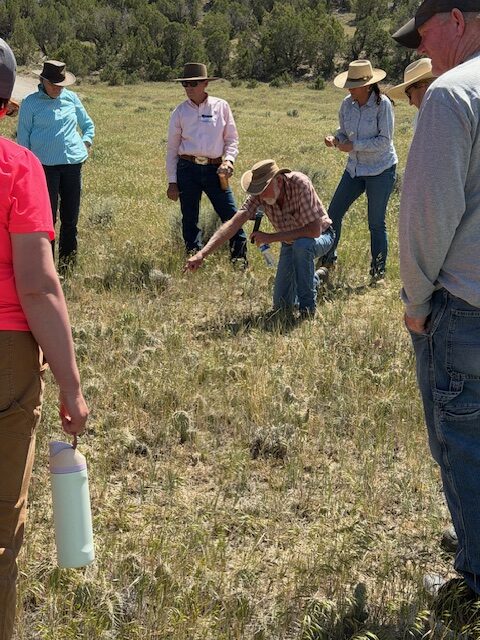
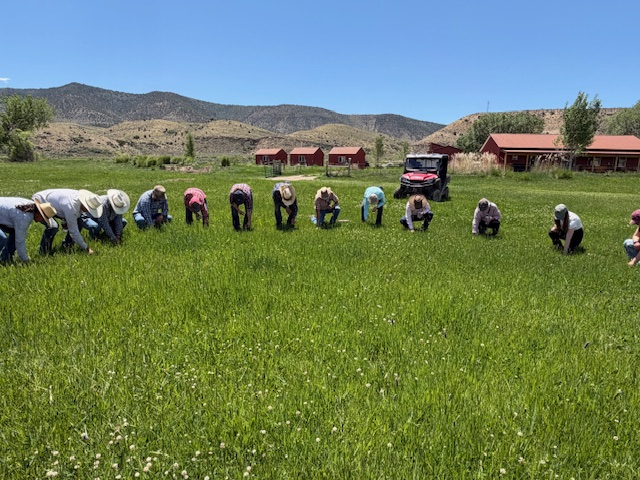
(Right) Participants examine pasture conditions during a recent grazing clinic in Meeker led by consultant Jim Gerrish. The clinic focused on managing forage, improving soil health and building more drought-resilient ranching operations.