
History Lessons, Meeker

HISTORY LESSONS: The Hame Cover

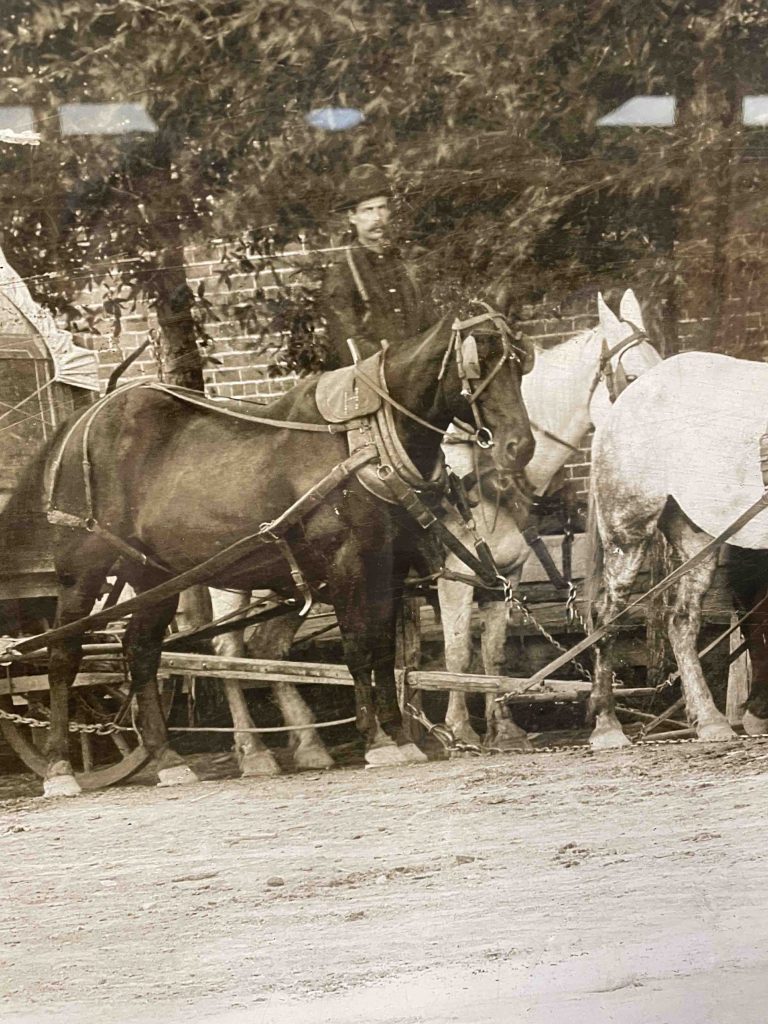
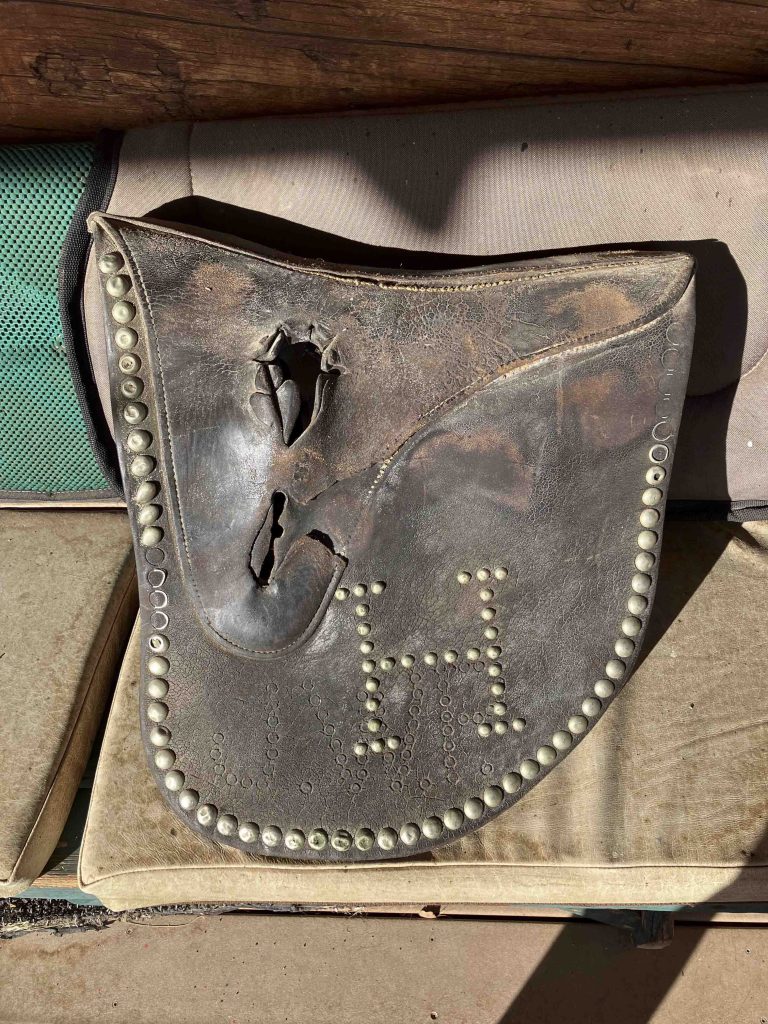
The mystery photo (inset above) is something you would find on a team of horses pulling a freight wagon or stage coach. It is made of leather. If you look close at the photo of the J. W. Hugus & Company team of horses, you will see a rider on the white horse. If you look at the dark horse without a rider, you can see a leather object with the letter “H” just above the reins. That is a Hame Housing or cover. Occasionally the wagon driver would need help controlling multiple pairs of horses. Another man would mount one of the horses.  This also be needed if the wagon or stage broke down in route. The work horse had no saddle of course and the leather collar stitching and wood hame would rub on the rider’s thigh , causing considerable discomfort. A leather cover, called the Hame Housing would be placed in a strategic location. Hame Housings were often decorated with studs. The cover used two holes to position it over the top of the hame. The horse hames are the carved pieces of wood or metal that fit around a horse’s leather collar.  (visible in the photo as looking like two horns above the collar). The harness, horse collar, and the hame allowed the horse to pull enormous loads.  The development of the hame in Europe and China enabled the pulling load to be evenly distributed to the horse’s shoulders and chest. This allowed the horse to pull increased loads and make farming more efficient. 

Sources: Hame Housing photo courtesy Ron Hilkey, owner; Wagon photo courtesy the Bank of the San Juans; Rio Blanco County Historical Society; justushorses.com.