


Author shares how they help restore rivers, streams and springs in Rio Blanco County
MEEKER | Beavers drew a respectable crowd last week as award-winning author Ben Goldfarb addressed the White River Alliance at a Meeker town hall meeting. Goldfarb, author of “EAGER: The Surprising Secret Life of Beavers and Why They Matter,” explained why beavers are regarded as nature’s engineers due to their extraordinary ability to transform declining waterways into resilient ecosystems.
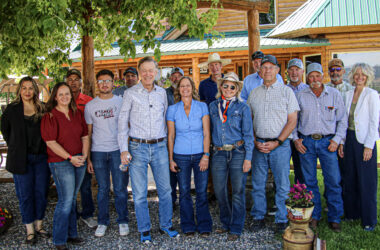
Local area landowners Mike and Tena Theos, with the help of U.S. Fish and Wildlife riparian specialist Bob Timberman, found ways to prevent culvert blockage and coexist with beavers. Over the past 15 years, they have seen visible improvements to their meadows because of the beaver dams. After reading Ben’s book, Mike invited him to speak to the White River Alliance and introduced him to the audience.
In many agricultural regions facing shrinking streams, depleted aquifers or unreliable seasonal flows, these animals are increasingly recognized as allies. Their instinctive construction of dams, canals and lodges creates a cascade of hydrological benefits capable of rejuvenating entire watersheds.
Yet despite their ecological value, beavers are still seen by many landowners and ranchers as troublesome creatures whose activities disrupt pastures, irrigation systems and fence lines. Understanding the science behind beaver-built wetlands — and the reasons ranchers often resist them — is essential to building cooperative solutions.
When a beaver builds a dam, the immediate effect is slowed water velocity. This simple action forces water to spread laterally into surrounding soils, recharging groundwater and raising the local water table. In a stressed agricultural basin where springs are weakening and creeks run dry earlier each year, these effects can be transformative. Wet meadows re-emerge, riparian vegetation regrows and summer baseflows stabilize. What looks like a messy pile of sticks is effectively a natural water-storage and filtration system — one that operates nonstop and without cost to the community.
As the dam increases water retention, silt and organic material accumulate, creating fertile substrates that support willows, sedges, cattails and other riparian plants. This vegetation, in turn, provides habitat for pollinators, fish, amphibians and birds. A richer ecosystem strengthens the agricultural landscape by reducing erosion, filtering agricultural runoff and improving soil moisture. These natural processes make waterways more resilient to drought and extreme weather, helping stabilize water availability for crops and livestock. Vegetation helps hold moisture in.
However, from some landowners’ perspective, beavers do not always feel like partners. Dams can flood roads, block culverts or inundate pasture, reducing usable grazing acreage. Chewed trees may include shade trees important for cattle or windbreaks that protect infrastructure. The costs of repairing damage or rerouting herds can build frustration, especially in regions where margins are thin and water management is already stressful. These concerns are legitimate — and central to why beavers must be managed, not simply tolerated.
Yet even ranchers who see beavers as nuisances often benefit indirectly from their presence. Beaver-created wetlands act as natural firebreaks, an increasingly valuable function in drought-prone landscapes.
They also provide late-season forage and maintain cooler microclimates for livestock during heat waves. In some communities, ranchers who once removed beavers later found their creeks drying earlier each summer, prompting a reevaluation of the animals’ role in water retention.
Modern coexistence strategies offer practical middle-ground solutions. Flow-control devices — such as “beaver deceivers” and pond-levelers — can prevent dams from flooding roads or pastures while allowing beavers to keep their wetlands intact. Strategic fencing can protect valuable trees, and relocation programs can move problem beavers to upstream areas where their hydrological benefits are needed most. These tools help ranchers safeguard their operations without losing the ecological services beavers provide.
For agricultural communities confronting drying hydrographic systems, beavers may represent not a nuisance but a lifeline. Their dams increase water security, their wetlands support diverse plant and animal communities, and their engineering builds natural resilience that no man-made structure can fully replicate at such low cost. By acknowledging both the challenges and opportunities of living with beavers, ranchers and conservation planners can work together to restore waterways — and in doing so, strengthen the long-term sustainability of the land they share.
Goldfarb’s book is available on Amazon in print, ebook or audiobook. https://bit.ly/4oKCAgr


