


Columns, Opinion

Guest Column: A climate lament

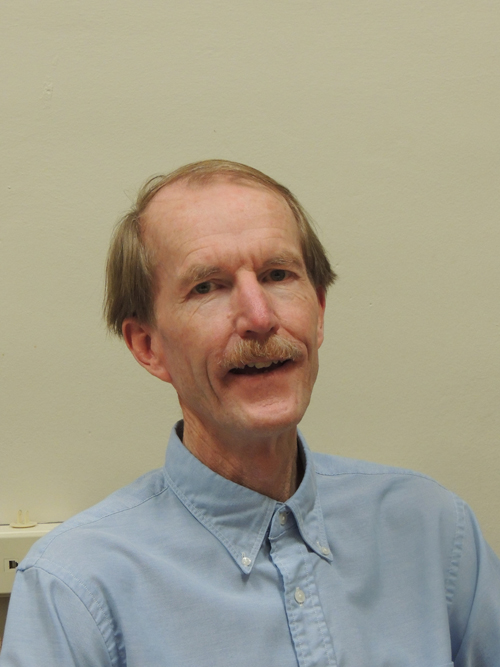
Dr. Bob Dorsett

RBC | Here is an update on the state of the global climate. Over the past 25 years I have reported evidence that earth’s climate is changing and that the consequences are alarming. I have no reassurance to offer here. Consider this a reflection on human psychology and its failures. 

Earth’s climate is changing even more rapidly than climate models predicted. Last year was the warmest on record and probably the warmest in the evolutionary history of Homo sapiens. (Ironic in itself, that name.) The magnitude of the temperature increase surprised even the most cautious of climate scientists. Record-breaking atmospheric temperatures continue into this new year. Antarctic sea ice cover dropped to an astonishing low. Water temperatures in the Florida Keys exceeded 100 degrees F. High ocean temperatures produced the worst coral bleaching yet in Australia’s Great Barrier Reef. Catastrophic extreme weather events causing $1 billion and more in damage now occur on average every two weeks. Southern Africa experiences prolonged drought and famine, climate catastrophe exacerbated by El Nino. Large populations in the global South are on the move, migrating north, leaving parched homelands. Enormous Canadian and Siberian wildfires blanket entire continents in smoke. Workers are incapacitated by intolerable heat. Heat waves kill hundreds to thousands per event while Alaskan villages sink into melting permafrost. I could go on. You’ve seen the news. Study EU Copernicus or NCEI for further details (links in the References below). 

We have entered an unstable climate regime that may oscillate for a while between extremes, and the extremes are becoming more so. There is no question about the general trend, though: hotter and drier in vast regions including the American Southwest, rising sea levels, shrinking ice caps and glaciers, more extreme weather events, more extreme wildfires.

It was all preventable. Well, at least we could have done a whole lot better preventing the direst consequences. Svante Arrhenius, Swedish atmospheric chemist and Nobel Laureate, demonstrated the warming effects of atmospheric carbon dioxide ‘way back in 1896. Charles Keeling reported evidence of rising global CO2 levels in 1961. James Hansen warned of the consequences at Congressional hearings in 1988, and his climate forecast models were pretty much spot on: heat waves, wildfires, melting ice caps, rising sea levels . . . the whole nine yards. Thirty-five years ago the modelers pretty well had it pegged. Continued monitoring of earth’s climate and improved models in the interim have only sharpened our appreciation of the general trend. But even the best of models are missing something important in the global climate system now. It’s worse than we thought, faster and steeper change than the models forecast. 

All along we dithered. Gas and oil production reached record levels last year and will probably set a new record this year. In our neighborhood, methane leaked out of pipelines and storage facilities in the Uintah Basin at a rate between 20,000 and 50,000 kilograms per hour, with resulting production losses of 6 – 8% over the most recent published study period 2015-21 (Lin et al, 2022). Methane is a much more potent greenhouse gas even than carbon dioxide; the heat trapping effect of 1 kg. methane is equivalent to 85 kg. CO2 over a 20-year time scale. Efforts to reduce methane emissions would have immediate short-term benefit, especially as the residence time of methane in the atmosphere is much shorter than that of CO2. And capturing that methane presumably would also increase revenues for the industry. 

Few people in the general population appreciate the models or the numbers. Too many policy makers and corporate leaders prioritize short-term profits over long-term sustainability. And no linchpin governments or industry yet factor the long-term costs of global warming into economic planning. Only the insurance companies, it seems, are taking action, refusing to insure communities at risk of rising tides or threatened by wildfire. We live in an artificial economy that assumes there is no cost to what comes out of smokestacks and tailpipes. 

What does that say about us? Maybe it’s just human psychology. We live our lives day to day in the familiar. Today mostly the same as yesterday. Expect tomorrow will be same as today. This year mostly same as last year. It’s familiar. Even given the compelling data to the contrary, we just assume the future holds the same as what we’re used to. Numbers and models don’t register like the familiar day to day. Maybe that’s the legacy of 100,000 years of modern human history lived mostly in a relatively stable and familiar climate. Cooler for extended periods, yes. Never hotter. 

Of course, there are other plausible explanations as well. 


By Dr. Bob Dorsett | Special to the Herald Times


Epilogue:

The human body cannot survive continuous wet-bulb temperatures above 95 degrees F without access to external cooling. Those are conditions soon facing about two-thirds of the world population for extended periods of the year (Raymond et al, 2020). (Wet-bulb measurements factor in humidity.) 

References:

EU Copernicus. Global Climate Highlights 2023. https://climate.copernicus.eu/global-climate-highlights-2023

Lin, John C., R. Bares, B. Fasoli, M. Garcia, E. Crosman, and S. Lyman. 2022. Declining methane emissions and high, steady leakage rates were observed in a study over multiple years in a western U.S. gas / oil production basin. https://www.nature.com/articles/s41598-021-01721-5

National Centers for Environmental Information. Annual 2023 National Climate Report. https://www.ncei.noaa.gov/access/monitoring/monthly-report/ional/202313#:~:text=Based%20on%20preliminary%20analysis%2C%20the,by%20record%20heat%20during%202023.

Raymond, Colin, T. Matthews, and R.M. Horton. 2020. The emergence of heat and humidity too severe for human tolerance. Science. https://doi.org/10.1126/sciadv.aaw1838