
History Lessons, Meeker

HISTORY LESSONS: Curie

RBC | With all the talk of nuclear power plants and storing spent fuel rods in Northwest Colorado, I thought it would be good to mention that radioactive ores and mills are nothing new to our area. 

Rifle used to have a big uranium milling facility in the 1970’s. It is my understanding that waste from that site is still in Garfield County somewhere. Rio Blanco County has it’s own vanadium mining history. 

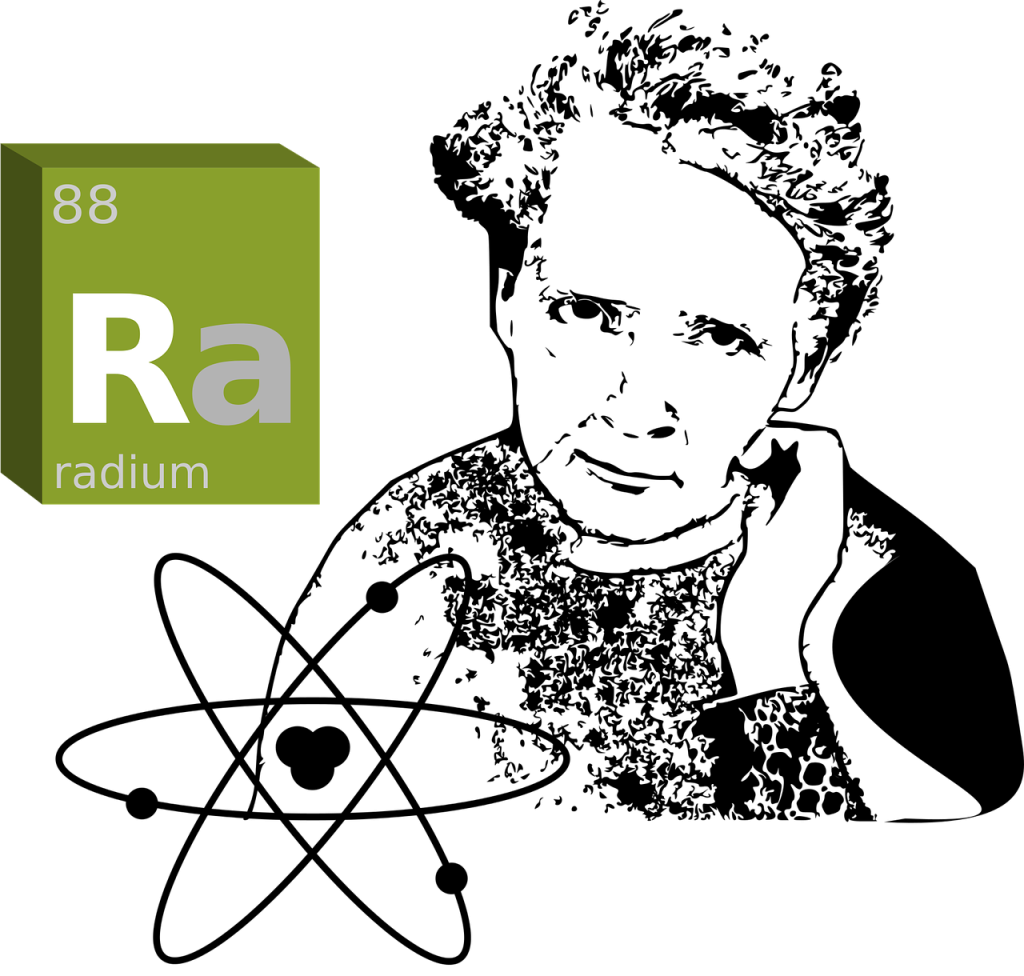
The Sept. 11, 1912, edition of the Rocky Mountain News carried the story of Professor Henri Chagnoux, one of the world’s most famous experts on radioactive minerals, coming to Meeker from Paris, France. Chagnoux was to examine carnotite deposits near Meeker, with the intent of buying mineral rights. Chagnoux was acting as representative of Madame Curie of France. Madame Curie had just won the 1911 Nobel Prize in Chemistry for isolating the element radium from carnotite in 1898. She was the first woman to win the prize. The Colorado Plateau has some of the richest deposits of carnotite in the United States.  

Carnotite contains uranium, vanadium and radium. It is mostly found in the Morrison Sandstone formation. Before uranium’s use for weapons was discovered, uranium was used as a pigment in photography and in yellow-green fluorescent glass. Radium was sought out for use in medicine. Vanadium was used in alloyed steel in Ford Model T car frames. 

It took 300 tons of carnotite to extract a single gram of radium, making each gram extremely expensive. In 1903, a single gram might bring $125,000 dollars ($4.1 million today, adjusted for inflation). 

U.S. production of radium slowed after 1923 when richer pitchblende ore deposits were found in the Belgian Congo. Radium was found in a sample of uraninite in 1898 by the Curie husband and wife team. 

The first medical use of radium was a treatment for cancer. However, Ambitious medical doctors and patent medicine salesmen quickly claimed it to cure a variety of ailments and sold products such as radium additives to toothpaste, and “Rivigator,” which was water with tiny amounts of radium dissolved. There was very little regulation in medicine in the early 19th century and this was the newest miracle cure in patient medicines. Radium was touted as treatments for anything from rheumatism, corns and hemorrhoids. Radium gives off its own greenish illumination. Should I speculate on the idea of human fireflies?  

In 1900, radium was being studied as a new way to create X-ray photographs. In 1906, the USGS reported on carnotite deposits on the upper Coal Creek valley, Rio Blanco County. The earliest mining and milling of radium were in Europe but by 1913, 75 percent of the world’s radium production came from the U.S. 

In Meeker in 1914, John H. Fox was convicted of “high grading” from the Riland, Caywood & Co. mines located in the Sleepy Cat District. 

WWII renewed interest in Rio Blanco deposits. After WWII, mining died out as soon as the war was over. It was not until much later that the deadly nature of radium was known. Inside the body, even one ten-thousandth of a milligram of radium can kill. 

Not long ago, our Barone Middle School students placed well with a history exhibit about the women who died of radium poisoning after ingesting tiny quantiles of the glowing paint illuminating dials and gauges on clocks and watches. The legal case brought about the need for work place safety by the government.

Sources: Historymed.collegeofphysicians.org; Colorado Geological ; Grinell,edu; Coloradohistoricnewspapers.org