
Meeker

Meeker brewer brings centuries-old Finnish beer to life—inside a tree log

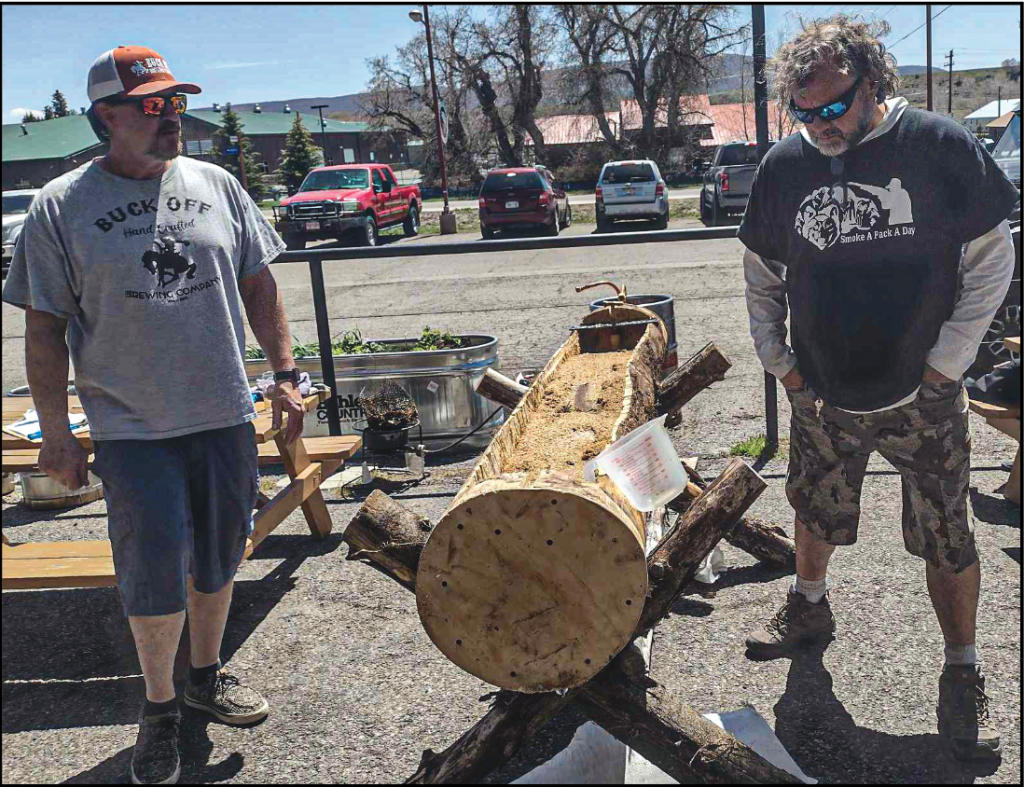
MEEKER | In the quiet town of Meeker, where the scent of pine mingles with the earthy aroma of malt, Chip Brown has replaced the shiny stainless steel of modern brewing equipment with something far more rustic: a hollowed-out tree log.

It’s not a gimmick—it’s a deliberate nod to an ancient brewing tradition.

“Between the log and juniper limbs, it adds a woody, sometimes gin-like flavor,” Brown said, stirring a grain mash made of Pilsner malt, Munich, and malted rye. “I’ve had people tell me it reminds them of being in the forest.”

Here in the heart of western Colorado, Brown is reviving sahti, a traditional Finnish farmhouse ale that dates back to at least the 1300s. His brewing vessel of choice, a log known as a kuurna, serves not just as a filter, but as a connection to history.

“Most people are intrigued and inquisitive about what I’m doing,” Brown said. “Some people are a little grossed out.”

Brown credits his mother for introducing him to brewing. What started as a garage cleanout turned into a lifelong passion.

“It was actually my mom that introduced me to brewing. She gave me some food-grade plastic buckets and a beer kit. I think she was just cleaning out her garage,” he said. “Sahti came along much later in my brewing life. I started with beer kits—usually different versions of wheat beers.”

After earning a certificate in Applied Craft Brewing from Regis University in Denver, Brown completed an internship at Smoking River Brewing Co. in Meeker. As part of the program, he was required to brew a beer on his own.

“Our brewer at the time, Tyler, had me draw from a hat,” Brown said. “I drew sahti. As I researched it—a beer that can be documented back to the 1300s—the use of a hollowed-out log lined with juniper limbs and heated rocks­—called to me.”

Brown’s recipe changes slightly with each batch, depending on what ingredients are available. He draws loosely from Lars Marius Garshol’s book, Historical Brewing Techniques.

“The ingredients used are modern, for the most part,” he said. “I use traditional European hops like Hallertau or Tettnang, but they’re not as important because the IBU [International Bitterness Units] is very low. I use a Norwegian beer yeast called kveik. The kuurna, heated rocks, and juniper limbs are what set my beer apart from modern beers.”

A typical brew day takes about six hours—not including cleanup. Thanks to the fast-acting kveik yeast, fermentation can be complete in five days or less, meaning the beer is often ready to package within a week.

“Certain specialty malts are sometimes hard to find, so the malt bill has changed each time I’ve made it,” Brown said. “Additionally, the particular kveik strain I used the past couple years is no longer available for the batch size I make, so I changed strains.”

Still, it’s the process—not just the final product—that keeps Brown invested.

“I’m brewing a beer that’s documented back to the 1300s,” he said. “I use hot rocks that sizzle as I lower them into the mash, and I lauter through a log. It’s time-consuming and a long process, but I love it all.”

Brown learned the techniques through both books and videos.

“Mostly from the book Historical Brewing Techniques by Lars Marius Garshol,” he said. “There’s also some information on YouTube.”

Traditionally, kuurnas are made from aspen or pine. Brown chose aspen for its practicality.

“There are fewer branches and knots to deal with when hollowing,” he said.

Last weekend marked the second batch to pass through his current kuurna. He used the first log for four batches before upgrading to a larger one.

“I rinse the log before and after a brew,” he said. “Historically, sahti was not boiled, but I boil mine to kill any undesirable bugs that may be lurking.”

As for taste, Brown insists the log makes a difference.

“Between the log and juniper limbs, it adds a woody, sometimes gin-like flavor,” he said. “I’ve had people say it reminds them of being in the forest.”

Controlling temperature in a log may sound tricky, but Brown said the conversion of starch to sugar is already complete by the time the liquid enters the kuurna.

“I’m using the log, lined with juniper, to filter and add flavor to the beer,” he said.

Constructing the kuurna was a collaborative effort.

“I have friends who are skilled with a chainsaw,” Brown said. “They cut the top off to make it flat, then used the tip of the chainsaw to cut a grid pattern into the heart of the log. An axe was used to finish hollowing it out.”

For Brown, brewing sahti is more than just crafting a unique beer—it’s a way to honor a tradition.

“There was a time in Finland when this was the normal way of brewing,” he said. “They didn’t have metal vessels. They used what they had. And they often had household yeast strains passed down through generations—just like some families here still pass down sourdough cultures.”

If he could share a pint with anyone, Brown said he’d sit down with a Finnish sahti brewer.

“Sahti is still brewed in Finland but isn’t exported to the U.S. I have no idea how mine compares to a true Finnish sahti,” he said.

For now, Brown keeps brewing in his corner of Meeker—carving out space for ancient flavors in a modern world, one sizzling rock and hollowed log at a time.